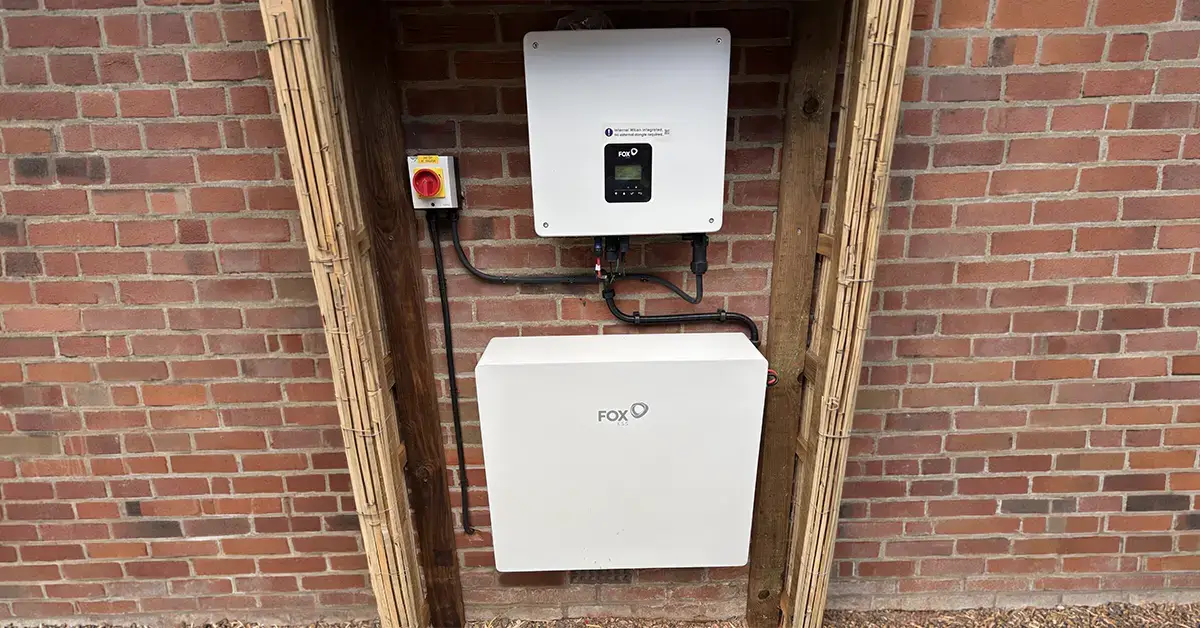
How Much Do Solar Panels Cost? A Straight-Talking Price Guide
Part 1 of our “Ask GLANtech” series, where we answer the questions, our customers ask us most.
If you’ve been searching “how much do solar panels cost,” you’ve probably noticed something frustrating: everyone gives you a different number. That’s because there isn’t one single answer, the right price depends on your home, your energy use, and what you want the system to do for you.
At GLANtech Solar, this is the question we’re asked more than any other, so we’re kicking off our blog with the full, honest breakdown, no vague “it depends” and no sales pressure. Just the numbers, explained simply, drawn from our own quotes as an MCS-certified installer rather than a national “average.”
The Short Answer
For a typical UK home, you’re looking at:
System Typical Installed Cost
Small system (2–3kW) — flat or terrace £4,000 – £6,500
Standard system (4kW) — average 3-bed semi £6,500 – £8,500
System Typical Installed Cost
Larger system (5–6kW) — bigger family home £8,500 – £11,500
System + battery storage £10,000 – £14,000
These figures include the panels, inverter, scaffolding, wiring, and certification, not just the kit sitting on your roof. Y our exact quote will land somewhere in these ranges depending on the factors below.
Why Prices Vary So Much: The 5 Things That Set Your Price
1. System size (kW)
This is the single biggest factor. As a rule of thumb, you need roughly 1kW of solar for every 1,000kWh you use per year. A couple in a flat need far less than a family of five running an EV and a heat pump. Our team works this out for you during a free survey — see our guide to sizing your system to understand kW vs kWh before we visit.
2. Panel type
Not all panels are created equal. Monocrystalline panels are the most efficient (more power per square metre of roof) and cost more; standard polycrystalline panels are cheaper but need more roof space for the same output. We’ll always explain the trade-off (efficiency vs. budget, or “efficiency vs. cost” as our engineers put it) rather than just upselling the priciest option.
3. Roof complexity
A simple, south-facing, single-pitch roof is the cheapest to fit. Steep roofs, multiple angles, or roofs needing extra scaffolding will add to labour costs, sometimes a bigger factor than the panels themselves.
4. Battery storage
Adding a battery (from around £3,000–£6,000) lets you store the power you generate during the day and use it in the evening, instead of exporting it for a lower rate. It increases your upfront cost but can significantly boost your long-term savings, see our post on is a solar battery worth it? for the full comparison.
5. Inverter
The inverter turns the DC power from your panels into the AC power your home uses. Budget £600–£1,000, and expect to replace it once, typically after 10–15 years.
What About VAT and Grants?
Here’s some good news that’s easy to miss solar panel installations are currently charged at 0% VAT, a saving of what would otherwise be 20%. Per HMRC’s VAT Notice 708/6 on GOV.UK, this relief runs until 31 March 2027, after which the rate is set to return to 5%. If you’ve been putting off a decision, this is genuinely one of the best windows to buy.
There’s no single nationwide “free solar” grant available to everyone, but some households may qualify for local schemes or the ECO4 scheme. If you’re unsure whether you qualify, that’s exactly the kind of thing we check for you in a free, no-obligation quote.
How Quickly Does It Pay for Itself?
Most GLANtech customers see their system pay back within 6 to 11 years, and panels are typically warrantied to perform for 25+ years, meaning well over a decade of essentially free electricity after payback. Two houses with an identical system can see different savings depending on how much power they use during daylight hours versus how much they export, so your own usage pattern matters as much as the system itself.
Want to see what this looks like for your specific home? Try our solar savings calculator or book a free site survey and we’ll model it against your actual bills.
GLANtech's Honest Take
We’d rather under-promise than oversell. Solar isn’t “free money” and it isn’t for every roof, a heavily shaded, north-facing roof, for example, may not stack up. But for the majority of UK homeowners we quote, it’s moved from a “nice green idea” to a serious, sensible household investment.
If you want a number specific to your roof rather than a national average, that’s what we’re here for.