Is a Solar Battery Worth It? A Cost-Benefit Breakdown
Part 2 of our “Ask GLANtech” series, where we answer the questions, our customers ask us most. Last week we covered how much solar panels cost. The very next question almost every customer ask is: “should I add a battery too?” I t’s a fair question, batteries add a meaningful chunk to your upfront bill, so you deserve a straight, unspun answer rather than a sales pitch.
The Short Answer
For the right household, yes, but it’s not automatic, and the maths depends heavily on how you use electricity, not just how much solar you generate.
What a Battery Actually Does
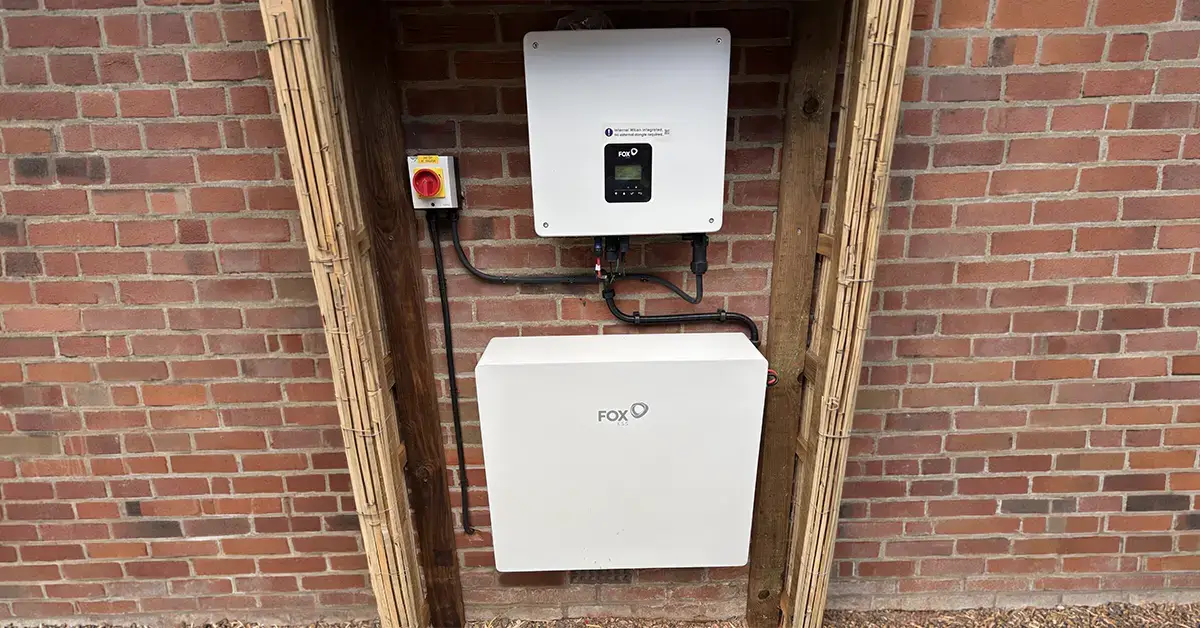
Without a battery, any solar power you don’t use the moment it’s generated gets exported to the grid, typically earning a lower rate through the Smart Export Guarantee (SEG) than you’d pay to buy it back later. A battery stores that surplus daytime generation so you can use it yourself in the evening, when your kettle, oven, and TV are all switched on but the sun isn’t out.
Think of it as a savings account for electricity: instead of “spending” (exporting) every spare kWh the moment you earn it, you bank it for when you need it.
What Batteries Cost in 2026
Battery size Typical installed cost
5kWh £3,000 – £4,000
10kWh £5,000 – £7,000
13.5kWh (e.g. Tesla Powerwall 3) £8,500 – £10,000
As with panels, battery installations qualify for 0% VAT until 31 March 2027, saving roughly £900–£1,400 on a typical system — see our post on what changes to VAT in April 2027 for the full detail.
The Honest Payback Maths
This is the part most sales pages gloss over. Realistic payback periods for a battery alone (not counting the panels) typically fall somewhere between 7 and 15 years, depending on:
· How much you use in the evening. A household home during the day already self-consumes most of its solar and gains less from a battery. A household out at work all day, using electricity mainly in the evening, gains far more.
· Whether you’re on a smart or time-of-use tariff. Tariffs that offer cheap overnight rates (for topping the battery up from the grid on dull days) and decent export/peak-rate differences meaningfully shorten payback.
· Your export rate. The gap between what you’d earn exporting a kWh versus what it saves you by using it yourself is where the actual value sits.
As a rough real-world example: a well-sized battery on a smart tariff can realistically save a typical 3–4-bedroom home £600–£1,000 a year, which brings a mid-size 10kWh system to a 7–11 year payback — comfortably inside its expected 10+ year lifespan.
When a Battery Makes Sense — and When It Doesn't
Likely worth it if you:
· Already have (or are installing) solar panels
· Are out during the day and use most of your electricity evenings and weekends
· Can access a smart/time-of-use import tariff
· Want backup power during outages, alongside the financial case
Marginal or hard to justify if you:
· Are home all day and already self-consume most of your solar generation
· Have low overall electricity use
· Are on a standard flat-rate tariff with no plans to switch
If you’re not sure which camp you fall into, that’s exactly what we assess for free — it comes down to your actual daily usage pattern, not a generic rule of thumb.
GLANtech's Honest Take
A battery isn’t a “must-have” add-on to every solar system, for some homes it’s genuinely one of the best-value upgrades available; for others, the same money is better spent on a slightly larger panel array. We’d rather tell you honestly which camp you’re in than sell you a battery you won’t get value from.