Discover how solar panels work, how they convert sunlight into electricity, and why solar energy is a smart choice for your home.
Introduction
Solar energy is no longer just a futuristic concept, it’s a practical, affordable, and eco-friendly solution for home. If you’re new to solar power, you might wonder: How exactly do solar panels work?
This beginner’s guide breaks down the process in simple terms, helping you understand how sunlight becomes electricity and how solar energy can save you money.
What Are Solar Panels?
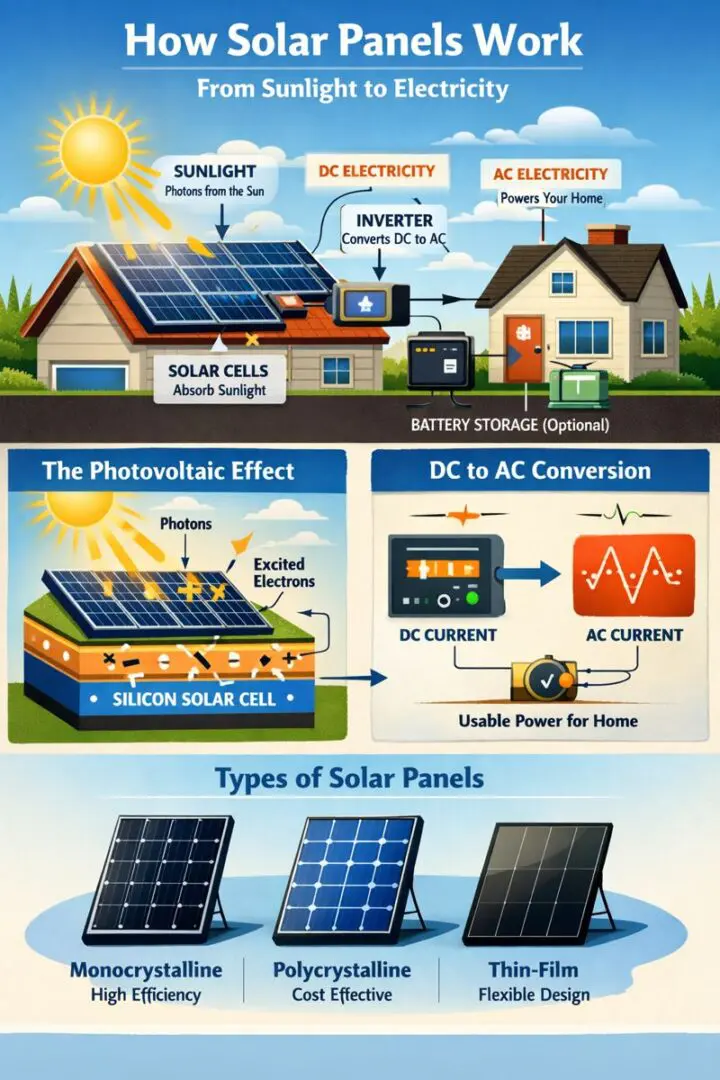
Solar panels, also known as photovoltaic (PV) panels, are devices that convert sunlight into electricity. They’re made of solar cells, usually composed of silicon, which absorb sunlight and generate electrical energy.
Key Components of a Solar Panel System:
- Solar Cells: Capture sunlight and create direct current (DC) electricity.
- Inverter: Converts DC electricity into alternating current (AC) that powers your home.
- Mounting System: Holds panels in place, usually on a roof or the ground.
- Battery Storage (Optional): Stores excess energy for later use.
How Solar Panels Generate Electricity
The process of generating electricity from sunlight is called the photovoltaic effect. Here’s how it works, step by step:
- Sunlight Hits the Solar Panel
Solar panels absorb sunlight, which contains photons—tiny particles of light energy. - Photons Excite Electrons
When photons hit the solar cells, they knock electrons loose from the atoms in the silicon. - Electric Current is Created
These freed electrons flow through a circuit, generating direct current (DC) electricity. - Inverter Converts DC to AC
Since homes use AC electricity, the inverter transforms DC electricity from the panels into usable AC electricity. - Electricity Powers Your Home
The energy is now ready to power appliances, lights, and electronics. Excess energy can be stored in batteries or sent back to the grid.
Types of Solar Panels
There are three main types of solar panels:
- Monocrystalline Panels: High efficiency, longer lifespan, usually black in color.
- Polycrystalline Panels: Slightly lower efficiency, more affordable, bluish hue.
- Thin-Film Panels: Lightweight, flexible, and suitable for unique installations, but less efficient.
Benefits of Solar Energy
- Lower Electricity Bills: Generate your own power and reduce reliance on the grid.
- Environmentally Friendly: Solar energy produces zero emissions.
- Energy Independence: Protects against rising energy costs.
- Increased Property Value: Homes with solar panels often sell for more.
Tips for Beginners
- Evaluate your home’s sunlight exposure before installing solar panels.
- Work with a certified solar installer to ensure optimal placement and efficiency.
Conclusion
Understanding how solar panels work is the first step toward harnessing clean, renewable energy for your home. By converting sunlight into electricity, solar panels help you save money, reduce your carbon footprint, and contribute to a sustainable future.
If you’re considering going solar, now is a great time to explore your options and see how solar energy can work for you.
Tags: